

Every year, thousands of people search for where to watch Flamenco in Malaga, whether they are visiting the city or already live here.
Some are already familiar with this art form.
Others are experiencing it for the very first time, driven by curiosity.
They have heard about Flamenco.
They have seen photographs.
They have watched videos.
But they have never experienced it live.
And that is usually where the surprise begins.
Many people arrive with a particular idea of what they are about to see, only to discover something completely different.
Things that can only be understood once the artists step onto the stage and the performance begins.
Flamenco is much more intimate than you might expect
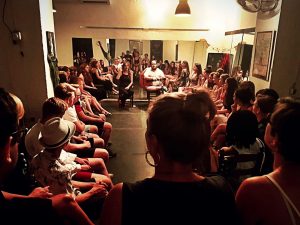
Many people imagine Flamenco as a grand spectacle viewed from a distance.
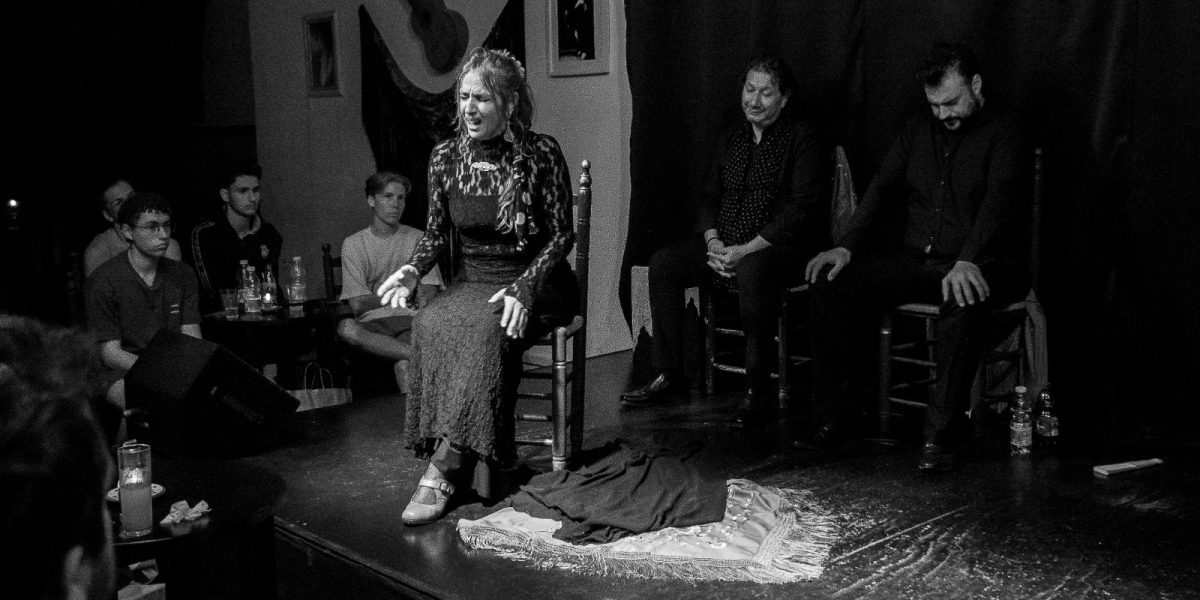
However, when Flamenco is performed in an intimate venue like KELIPÉ, the experience takes on an entirely different dimension.
Being so close allows you to notice details that often go unnoticed.
The artists’ expressions.
The natural sound of the guitar.
The conversation between the singing, the dancing and the music.
Everything happens just a few metres from the audience, creating a sense of closeness that has been part of KELIPÉ’s identity since the very beginning.
Sometimes, a single glance, a smile or a gesture says more than any programme notes ever could.
The guitar plays a far greater role than most people expect
When people think of Flamenco, dancing is often the first image that comes to mind.
Yet during a live performance, many are surprised to discover just how central the guitar really is.
The guitar does far more than accompany.
It sets the direction.
It introduces new ideas.
It creates atmosphere.
It drives the rhythm.
And it maintains an ongoing dialogue with every other artist on stage.
At KELIPÉ, the music is also based on original compositions written by Azukita.
These pieces form part of the theatre’s artistic identity, giving every performance its own distinctive personality.
For many audience members, discovering just how expressive the guitar can be is one of the evening’s greatest surprises.
Susana La Yedra and KELIPÉ’s artistic identity
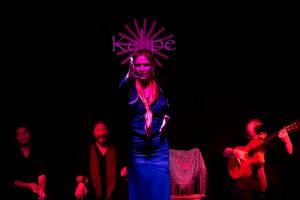
At the heart of this artistic vision is Susana La Yedra.
As both the principal dancer and founder of KELIPÉ, her career has been closely connected to creating a space where Flamenco can be experienced with its own distinctive identity.
Her approach to performance is built on a genuine dialogue with the guitar and the singer, helping to shape the artistic character that defines the theatre today.
For many visitors, seeing her perform is also an introduction to a deeply personal interpretation of Flamenco, where technical mastery and emotional expression exist in perfect balance throughout every performance.
You don’t need to understand Flamenco to enjoy it
One of the questions first-time visitors ask most often is very simple:
“Will I understand what I’m watching?”
The answer usually arrives within the first few minutes.
You don’t need to know Flamenco terminology.
You don’t need to recognise different styles.
You don’t need any previous experience.
Every evening we welcome visitors from countries and cultures all over the world.
People who speak different languages.
People of all ages.
Yet for the 90 minutes of our Flamenco performance, everyone shares the same experience.
Perhaps because music, rhythm and artistic expression communicate far more than words ever can.
Every performance has its own character
Another surprise for many audience members is discovering that Flamenco is never completely fixed.
There is structure.
There is preparation.
There is years of artistic work behind every performance.
But there is also room for nuance.
For subtle changes.
For conversations that happen naturally in the moment.
The relationship between the guitar, the singing and the dancing creates moments that belong to that performance alone.
That is one of the reasons Flamenco remains such a rich and living art form.
Two people attending on different evenings may leave with completely different memories.
Every performance is built on years of dedication
When audiences watch a performance, they see the finished result.
What they do not always see is everything behind it.
Years of learning.
Countless hours of rehearsal.
Shared experiences.
At KELIPÉ, there is also a Flamenco school that has spent more than two decades teaching and sharing this art.
Many artists have trained here.
Many students have discovered their passion for Flamenco within these walls.
All of that accumulated experience, in one way or another, becomes part of what happens on stage every night.
Watching Flamenco is also a different way to discover Malaga
Most visitors know Malaga for many different reasons.
Its beaches.
Its cuisine.
Its museums.
Its historic landmarks.
But there is also a cultural Malaga, shaped every day by musicians, artists, creators and venues dedicated to the performing arts.
That is why so many people discover that attending a Flamenco performance is much more than an evening’s entertainment.
It is also a way of connecting with an important part of the city’s cultural identity.
A living tradition that continues thanks to the dedication of those who have devoted their lives to this art.
KELIPÉ: A unique way to discover Flamenco in Malaga
Since 2001, KELIPÉ has shared Flamenco through its own distinctive artistic vision.
Susana La Yedra’s dancing.
Azukita’s guitar.
Original music.
An intimate connection with the audience.
And a very personal approach to live performance.
Together, they create an artistic experience for anyone wishing to discover Flamenco during their visit to Malaga.
Many people arrive simply looking for somewhere to watch Flamenco in Malaga.
They leave having discovered something far more meaningful than they expected.
Experience a Flamenco Evening at KELIPÉ
If you would like to experience Flamenco in the heart of Malaga, you can view our upcoming performances and book your tickets here: Watch live flamenco at KELIPÉ
We look forward to welcoming you for an unforgettable evening of music, dance and culture in the heart of Malaga.