

Speaking about Flamenco in Málaga means speaking about a memory that isn’t written in books, but in the voices of the singers, in the handclaps that set the rhythm in communal courtyards, in the cafés where people fell silent to listen to an artist break from within. Málaga is not simply a city with Flamenco; it is a place where this art has breathed, blended, and found its own accent for centuries.
And yet, its history is not a museum. It is still alive. Still changing. Still beating.
At KELIPÉ we feel it every day: when we open the doors of our Theatre, we step into a tradition that comes before us, and at the same time pushes us forward. What we do is not nostalgia. It is continuity.
The origins: Málaga, a crossroads
The history of Flamenco does not have a single origin. It was built through mixture: of cultures, celebrations, and paths walked over centuries. Málaga was always a port open to the world, and in that constant coming and going emerged sounds that we now recognise as our own: verdiales from the Axarquía region, natural fandangos, jaberas… Every neighbourhood, valley, and village found its own way of feeling.
While other parts of Andalusia developed schools and styles, Málaga was doing something very malagueño: mixing. Transforming. Opening. Perhaps part of its magic lies there.
Because in this city, what arrives becomes something new — but never diluted. It becomes its own.
The music cafés: the first public heartbeat
During the 19th century, Málaga was one of the places where Flamenco began to be shown publicly. Music cafés were not luxurious theatres: they were spaces where artists and audiences shared tables, wine, conversation… and art. The singing there was real because there was no separation between life and the stage.
And although cities have changed, that spirit still exists today.
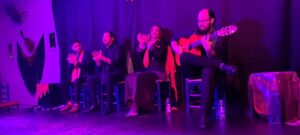
At KELIPÉ we work to ensure that this closeness never disappears. Our Theatre — intimate, with no artifice — is not a re-enactment of the past; it is a continuation of that tradition. When the audience enters, they are not coming to watch a “show”; they are entering a space where Flamenco is alive, not displayed.
The soul of Málaga: a clearer, more open, more Mediterranean Flamenco
Málaga has a very particular way of feeling Flamenco. It has light, sea breeze, and a kind of melancholy that doesn’t weigh you down but caresses you. Verdiales, for example, are one of the oldest styles in all Andalusian folklore. They are celebration, ritual, joy. And they are, in their own way, a reminder that Flamenco is as much about happiness as it is about sorrow.
Artists who grow up here drink from that essence. And at KELIPÉ we don’t try to create anything we are not; we don’t seek to imitate other schools or dress Flamenco in things it does not need. Málaga already has its own language, its own silences, and its own soulfulness.
All it needs is respect.
Flamenco today: a tradition that transforms without breaking
Many believe that Flamenco is old, that its value lies in what it once was. But if we have learnt anything as artists, it is that tradition is not protected by freezing it, but by living it. Flamenco changes because people change.
We see it in every class we teach, in every workshop held with companies, in every spectator who enters the Theatre and discovers something unexpected. Flamenco is not past history; it is the absolute present.
In Málaga especially, it continues to grow — always from an honest place.
The audience as witness and heir
Perhaps the most beautiful thing about the history of Flamenco is that it does not belong only to the artists. It belongs to those who listen. The audience is part of the ritual, part of the rhythm, part of the moment when something breaks or lights up inside. The history of Flamenco in Málaga is not made only of names; it is made of shared moments.
At KELIPÉ we see it every day: people who arrive unsure of what they are going to feel and leave transformed. Some cry. Others fall silent. Others return. Many bring new people: mothers, friends, partners, children. And little by little, this art continues to be passed on. Not out of obligation. Out of emotion.
That is history.
That is Flamenco.
If you want to understand Málaga’s Flamenco… you must feel it
You can read books, study styles, research dates and names. All of that is valuable. But the true history of Flamenco in Málaga is not learned by reading. It is learned by entering a space where the art happens only a few centimetres away. You learn it by listening to how the guitar opens a silence. You learn it when a vocal cry reaches you without asking permission.
The history of Flamenco is felt.
It is lived.
And it is remembered.
Do you want to discover it for yourself?
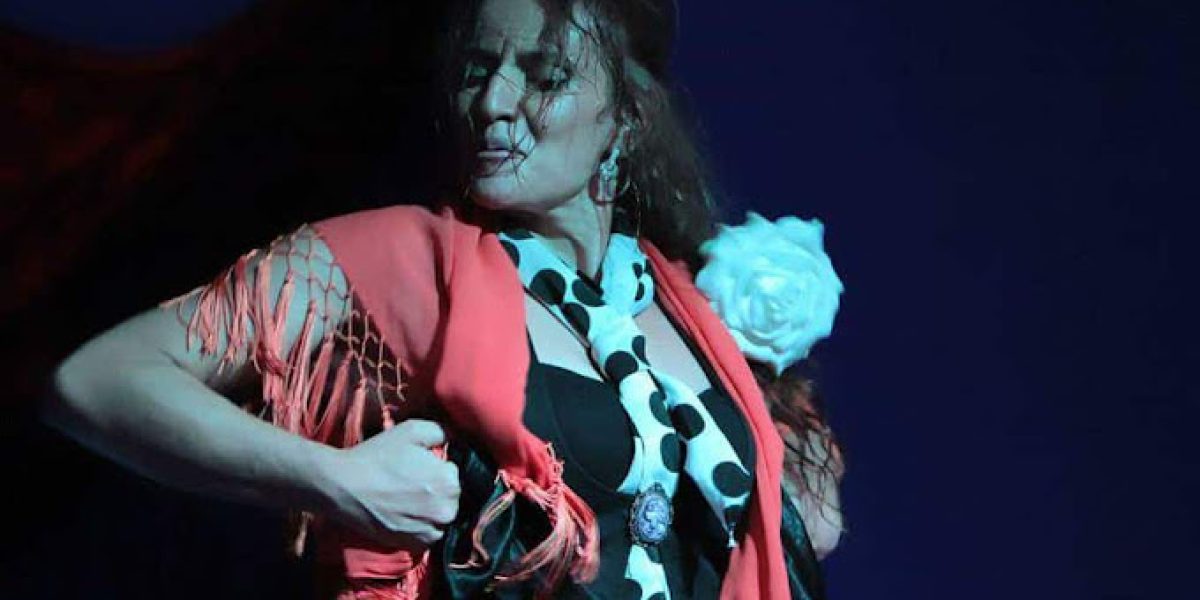
If you want to connect with the history of Flamenco in Málaga in a real way — not touristy, not superficial — we await you at our Theatre. Here you will not see neon lights or empty choreography. You will see art. You will see truth.
Tickets are available exclusively through our official channels:
Official sales: Flamencotickets.com
Website: kelipe.net
Telephone / WhatsApp: +34 665 097 359
We look forward to seeing you!