

When people talk about Flamenco, it’s common to hear expressions such as Traditional Flamenco, pure Flamenco or Flamenco with deep roots.
These are terms frequently used in conversations, performances, festivals and specialist publications.
But we rarely stop to consider what they actually mean.
Is it a particular way of singing?
A specific style of dancing?
A musical genre?
Or is there something more behind these expressions?
The answer cannot be reduced to a single definition.
Traditional Flamenco is far more than a collection of traditional Flamenco styles or a particular way of performing on stage.
It is a way of understanding this art form through respect for the generations of artists who have kept it alive.
It is a cultural heritage that continues to be passed on thanks to the performers who devote their lives to preserving it, sharing it and ensuring that it remains relevant today.
That is why, when we talk about Traditional Flamenco, we are also talking about memory, learning and the passing on of knowledge.
Tradition belongs to the present, not the past
We often associate the word tradition with something old.
Something that belongs to history.
Yet Flamenco tells a very different story.
Its traditions are not confined to books or historical archives.
They live on through people.
Through those who continue to sing, play and dance using the knowledge handed down by those who came before them.
Every generation has accepted the responsibility of preserving this legacy and passing it on to the next.
Thanks to that continuous process, Flamenco has reached the present day while retaining a recognisable identity.
Not because it has remained frozen in time.
But because dedicated artists have continued to perform it, teach it and share it as part of Spain’s cultural heritage.
Tradition, therefore, is not simply about remembering the past.
It is about keeping an artistic language alive that continues to find its place on today’s stages.
Learning that goes far beyond technique
Some disciplines can be mastered simply by following a manual.
Flamenco has never been one of them.
Of course, study and formal training are important.
But much of this art is passed on in a very different way.
By listening.
By observing.
By spending time alongside other artists.
By learning to recognise the subtle details that emerge during a live performance.
Many of its lessons cannot be explained in theory.
They are discovered gradually.
During rehearsals.
Through conversations.
By sharing artistic experiences.
That is why, when Flamenco artists speak about their teachers, they are rarely referring only to technical instruction.
They are also talking about a way of understanding Flamenco that has become part of who they are over the years.
Every artist finds their own voice
Talking about Traditional Flamenco does not mean that every performer expresses it in exactly the same way.
Quite the opposite.
Every dancer, guitarist and singer develops their own artistic identity.
Their own understanding of rhythm.
Their own way of communicating with fellow performers.
Their own approach to building a performance.
This is why two Flamenco shows can share the same roots while creating completely different emotions.
Tradition provides a common language.
But every artist discovers their own voice within that language.
And that diversity is one of Flamenco’s greatest strengths.
Because keeping a tradition alive does not mean giving up individuality.
It means expressing it through knowledge, experience and respect for everything that has been handed down through generations.
Rhythm (Compás): The language that brings the artists together
When people watch a Flamenco performance, their eyes are often drawn first to the dancer or to the passion of the singer and guitarist.
Yet beneath every movement, every note and every moment on stage lies something even more important — compás, the rhythmic heartbeat of Flamenco.
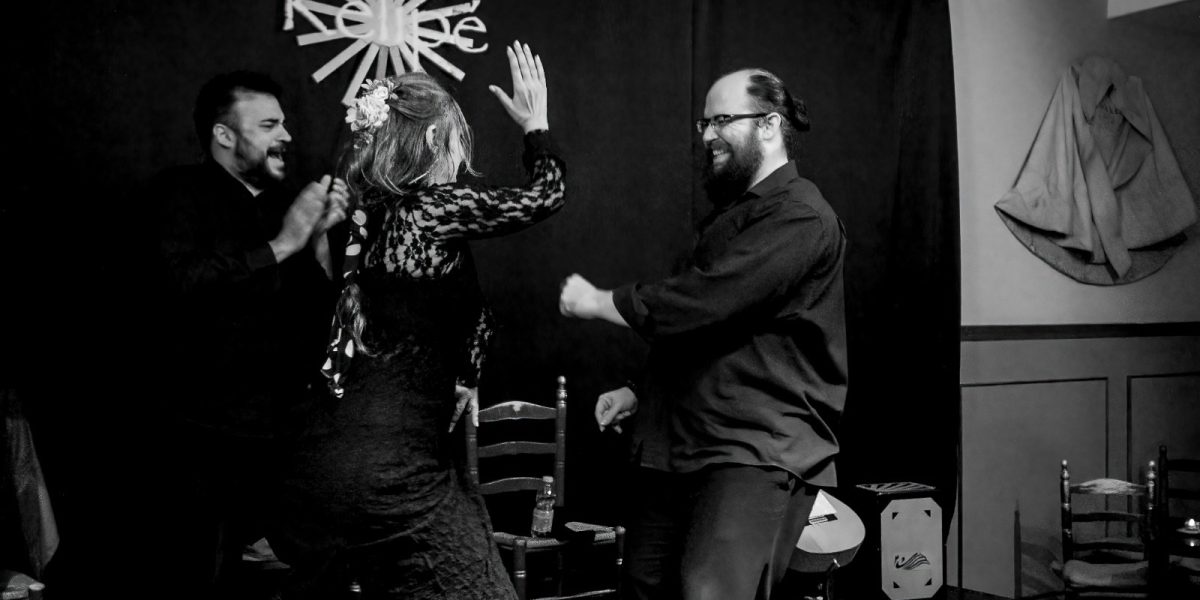
Far more than a technical concept, compás is the invisible language that connects the guitar, the vocals and the dance. It allows the artists to listen to one another, respond instinctively and create something unique together.
This continuous dialogue is what gives Flamenco its unmistakable sense of authenticity and spontaneity. Rather than following a rigid script, every performance unfolds naturally, shaped by the interaction between the artists in that very moment.
A Traditional Flamenco performance is never simply a sequence of songs and dances.
It is a living conversation, where every gesture, every pause and every note has its place within a shared artistic language.
Perhaps that is why Traditional Flamenco continues to captivate audiences from around the world. Even without understanding the language, people instinctively recognise the honesty, emotion and connection that make this art form so extraordinary.
The guitar, singing and dance speak the same language
People often think of Flamenco as three separate disciplines.
Dance.
Guitar.
Singing.
But the moment a performance begins, those distinctions disappear.
The three become one.
The guitar does far more than accompany the dance.
The singing is not simply there to carry the melody.
Each artist listens to the others, responds instinctively and contributes to an artistic dialogue unfolding before the audience.
This constant interaction is one of the qualities that makes Flamenco such a unique art form.
It is also the moment when many people realise that every performance offers far more than a sequence of choreographies or songs.
It reveals a way of approaching the stage in which every performer shares the same artistic language.
Creativity is also part of traditional Flamenco
Talking about Traditional Flamenco does not mean focusing solely on inherited repertoire.
Throughout history, countless artists have felt the need to express their own ideas through this artistic language.
Always with knowledge.
Always with respect.
Because creating something new is not about moving away from tradition, but about entering into a dialogue with it.
Every new composition grows out of personal experience, an individual way of listening to Flamenco and a unique way of living it.
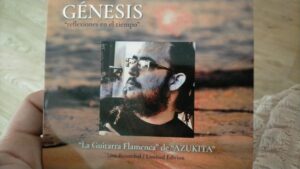
At KELIPÉ, for example, a significant part of the music performed during the show has been composed by Azukita.
These are original pieces born from years of study, performance and dedication to Flamenco.
They are not intended to replace traditional repertoire.
Quite the opposite.
They enrich an artistic production that honours the roots of Flamenco while developing its own distinctive identity.
Original music gives every performance its own recognisable character and allows audiences to discover fresh perspectives on this cultural heritage without losing sight of its essence.
Why does traditional Flamenco continue to fascinate so many people?
We live in a world where almost everything happens at incredible speed.
We consume information constantly.
We watch videos that last only a few seconds.
We listen to songs that change from week to week.
And yet, every day, thousands of people still choose to sit in front of a stage and experience a live Flamenco performance.
Perhaps that is precisely why.
Flamenco invites us to slow down.
To listen.
To observe.
For just over an hour, the pace of everyday life remains outside the theatre, while every ounce of attention is drawn to what unfolds between the performers.
There are no filters.
No special effects disguising what truly matters.
Just people sharing their art with other people.
In a world where so many experiences have become increasingly fast and fleeting, that authenticity continues to captivate audiences of every age and nationality.
A tradition that continues to find new audiences
Traditional Flamenco does not belong only to those who have loved it all their lives.
It also belongs to those discovering it for the very first time.
Every evening, visitors from all over the world take their seats without knowing exactly what awaits them.
Some are already familiar with Flamenco’s history.
Others have never attended a performance before.
Yet many leave with the very same feeling: they have discovered an art form capable of expressing far more than they ever expected.
Perhaps because Flamenco speaks a language that goes beyond words.
The dialogue between the artists.
The rhythm of the compás.
The power of the guitar.
The expressiveness of the dance.
These are elements that any audience member can appreciate, regardless of where they come from.
And that ability to connect with such a diverse audience proves that this tradition continues to find new ways of being shared.
KELIPÉ: More than two decades of sharing traditional Flamenco
Since 2001, KELIPÉ has been dedicated to one clear purpose: creating a place where Flamenco can be experienced with intimacy, respect and a genuine commitment to this art form.
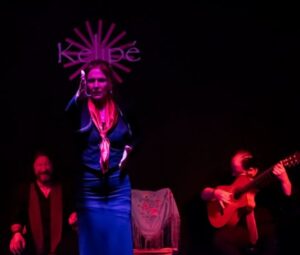
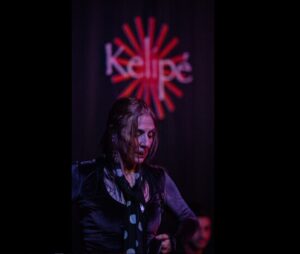
Its founder, Susana La Yedra, has devoted much of her career to building a theatre where the stage becomes a meeting place between artists and audiences.
Her dance, shaped by years of training and experience, is central to KELIPÉ’s artistic identity, naturally complementing Azukita’s guitar and the singing that accompanies every performance.
Together, they create a show where tradition, sensitivity and individuality come together without the need for elaborate productions.
The theatre’s distinctive character is further enriched by the original music composed by Azukita.
These compositions are rooted in a profound understanding of Flamenco and enhance the artistic experience while remaining deeply respectful of the art form’s traditions.
Only one performance is presented each evening.
A deliberate decision that allows the artists to focus all their preparation, concentration and energy on a single performance.
Because Flamenco deserves that level of dedication.
And so do the people who come to experience it.
Discover traditional Flamenco live
Reading about Flamenco helps us understand its history.
Listening to its artists brings us closer to the way they experience this remarkable art.
But there is one part that can only be discovered once the performance begins.
The sound of the guitar filling the theatre.
The dialogue between the performers.
The pulse of the compás.
The shared silences.
The unspoken connection between the artists.
The intimacy created when everything unfolds just a few metres from the audience.
These are details that words can never fully capture.
That is why attending a live performance remains one of the finest ways to experience Traditional Flamenco and understand why it continues to occupy such an important place in Andalusian culture.
Traditional Flamenco continues to write its story
We sometimes think of tradition as something that belongs solely to the past.
Traditional Flamenco proves exactly the opposite.
Every rehearsal.
Every performance.
Every student taking their first steps.
Every artist walking onto the stage.
All of them become part of a story that continues to be written every single day.
Perhaps that is Traditional Flamenco’s greatest strength.
Not remaining unchanged.
But continuing to be passed from one generation to the next by the people who live it, respect it and share it.
If you would like to experience this authentic approach to Flamenco for yourself, you can view KELIPÉ’s upcoming performances and book your tickets through our website.
Traditional Flamenco in KELIPÉ
Because some traditions can only be truly understood once you experience them first-hand.