

There are cities you visit.
And there are cities you feel.
Málaga belongs to the latter.
You can walk its streets, discover its history, sit by the sea or get lost in its neighbourhoods. But there is something that does not appear on maps and yet forms an essential part of its identity.
Flamenco.
Not always visible.
Not always obvious.
But always present.
Beyond the show
When someone searches for Flamenco in Málaga, they often think of a show.
A venue.
A stage.
A performance.
But Flamenco does not begin or end there.
Flamenco is a form of expression that spans time, that has grown in Andalusia and continues to evolve without losing its roots. It is emotion, but it is also structure. It is improvisation, but it is also discipline.
And when it is presented live, it stops being theory.
It becomes an experience.
The origins of Flamenco in Málaga
To understand Flamenco in Málaga, you have to look back.
The province has historically been a meeting point of cultures: Arab, Jewish and Romani influences blended over centuries, giving rise to unique forms of expression.
Within Flamenco, Málaga has developed its own styles, known as “palos malagueños”. Among them are the “malagueñas”, the “verdiales” and the “rondeñas”, each with its own character, rhythm and way of conveying emotion.
These styles were not born on stages.
They were born in popular settings, in celebrations, gatherings and moments where art emerges naturally.
Over time, Flamenco became professionalised, moved onto stages and evolved, but it has maintained that root: the need to express what cannot be said in any other way.
That is why when you watch Flamenco in Málaga today, you are not just watching a show.
You are connecting with a story.
A city open to Flamenco
Málaga is not a closed city.
It is dynamic, open and constantly evolving.
And this is also reflected in its relationship with Flamenco.
Here, very different approaches coexist: from formats designed for those seeking a first introduction, to spaces where Flamenco is developed with depth and respect.
It is not about choosing one or the other.
It is about understanding what you are looking for.
Because Flamenco in Málaga can be many things.
But not all of them create the same experience.
Are you planning your next trip?
If Málaga is on your radar, organising your journey well can make a difference from the very beginning. Finding flights with good schedules and prices allows you to focus on what matters: enjoying the experience from the moment you arrive.
Search at https://www.kayak.es/flights
The moment when everything changes
There is a very specific moment in any Flamenco show.
A moment when the noise disappears.
When attention focuses.
When time seems to stand still.
The guitar marks the beginning.
The body responds.
Silence fills with meaning.
That moment cannot be forced.
It cannot be repeated.
It happens.
And when it happens, the spectator stops being a spectator.
They become part of what is taking place.
Flamenco live: where everything is real
Flamenco needs to be live.
Not because it is tradition.
But because it is language.
The guitar does not accompany: it dialogues.
The dance does not follow: it responds.
The singing does not fill space: it cuts through it.
Each performance is different because it depends on that dialogue.
On the energy of the moment.
On the connection between artists.
On the presence of the audience.
That is why a Flamenco experience in Málaga cannot be measured only by what you see.
It is measured by what you feel.
The importance of closeness
Flamenco is not designed for distance.
The closer it happens, the more meaning it has.
To hear the wood of the guitar without filters.
To feel the impact of the heel on the floor.
To perceive the breath before a turn.
In intimate spaces, all of this is amplified.
The experience stops being purely visual and becomes almost physical.
And that closeness completely transforms the perception of the show.
Identity over format
In a city with a wide range of options, it is easy to fall into performances that repeat structures.
Same repertoire.
Same rhythm.
Same result.
But Flamenco, when it is authentic, does not work like that.
It needs identity.
Projects where artists do not simply perform, but develop their own proposal. Where the music is not a generic resource, but part of an artistic construction.
That difference may seem subtle.
But when you are there, you feel it.
An experience that goes beyond the moment
Flamenco has something that does not always happen with other experiences.
It does not end when it finishes.
It stays.
In your memory.
In your body.
In that feeling that is difficult to explain.
Some people arrive out of curiosity.
And leave with something more.
Not necessarily with a technical explanation, but with an emotional connection that remains.
Discover more things to do in Málaga
Flamenco is only one part of everything the city offers. From cultural activities to hidden corners, planning your stay can help you make the most of it.
Explore more at https://www.kayak.es/Málaga.5309.guide
Experiencing Flamenco in Málaga from within
If you are looking for a Flamenco experience in Málaga that goes beyond the surface, it is worth choosing spaces where the art is nurtured from within.
Proposals where the music is live, where the artists are part of a real project and where closeness allows everything to happen naturally.
At KELIPÉ, Flamenco is approached from that philosophy.
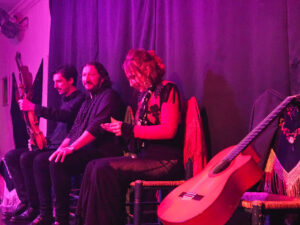
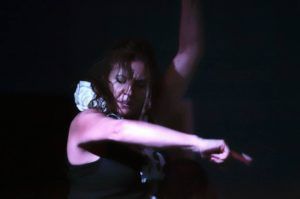
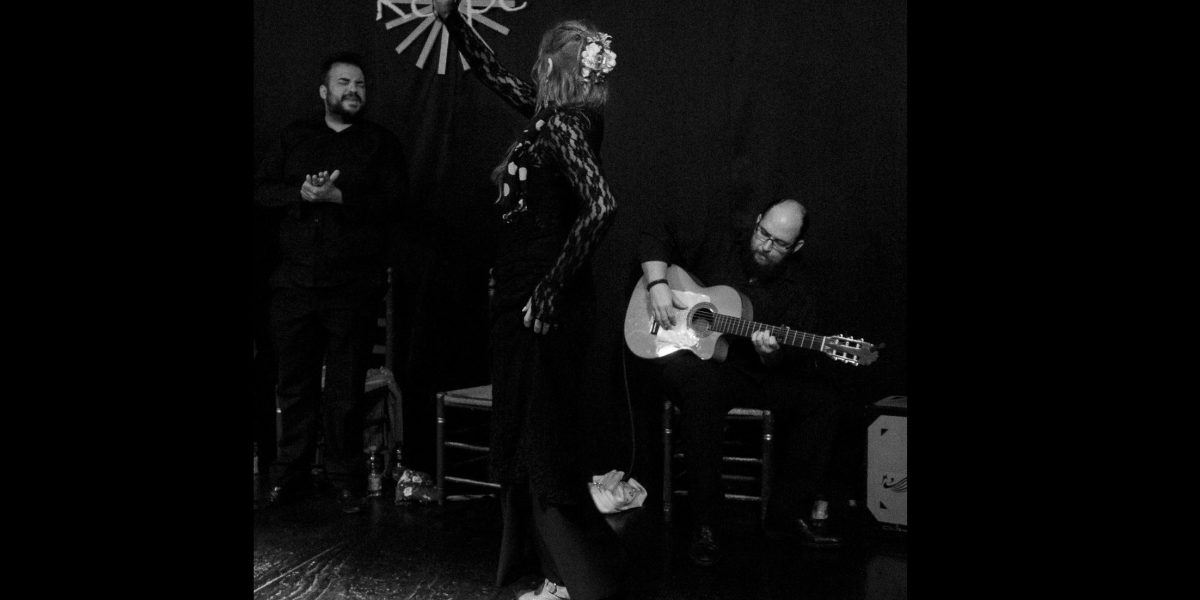
An intimate space, with artists who develop their own language —such as Susana La Yedra in dance or Azukita on guitar— and original music that is part of the artistic project. In addition, only one show is offered per day, allowing every detail to be carefully considered and preserving the energy, focus and authenticity that Flamenco requires.
It is not about reproducing a format.
It is about creating a moment.
If you would like to experience it, you can check upcoming dates and book your ticket here: KELIPÉ Flamenco Tickets
When you understand it without explanation
Flamenco is not always understood through words.
Nor does it need to be.
It is enough to be there.
To listen.
To feel.
To let it happen.
And when it happens, it is no longer just Flamenco in Málaga.
It is an experience that stays with you.