

Flamenco is one of the most emblematic cultural expressions of Andalusia, and its development has been deeply influenced by a rich blend of cultural traditions. Among the most notable is the gypsy influence on flamenco, a legacy that has shaped the emotional and artistic essence of this genre. Over the centuries, gypsies have played a crucial role in the evolution of flamenco, turning it into a unique, passionate, and complex artistic expression.
The origins of flamenco: a fusion of cultures
To understand the gypsy influence on flamenco, it is important to go back to the origins of the art in Andalusia. Flamenco, as we know it today, is not the product of a single culture but the result of the fusion of several influences. In the 15th and 16th centuries, Andalusia was a meeting place for different cultures: Christians, Arabs, Jews, and gypsies. These groups contributed their own musical styles, traditions, and forms of expression.
However, it was the arrival of the gypsies to the region that marked a turning point. Originally from northern India, the gypsies arrived on the Iberian Peninsula through Europe and settled in southern Spain. In Andalusia, their music and lifestyle intertwined with local traditions, and the result of that fusion is the flamenco we know today.
The gypsy influence on flamenco styles and forms
The gypsy influence on flamenco is especially evident in the “palos” or flamenco styles.
The gypsies brought a deep emotional charge to flamenco, especially through the “cante jondo,” which is characterized by its intensity and depth.
This type of singing is considered one of the purest and oldest forms of flamenco, and its origin is closely related to the gypsy experience in Spain, marked by marginalization and struggle.
The “duende” of flamenco, that indescribable artistic expression that seems to come from the depths of the soul, is something that gypsies have uniquely mastered and transmitted. Over time, their way of feeling and expressing flamenco has greatly influenced the interpretation of singing, dancing, and guitar playing.
Among the flamenco styles most connected to the gypsy tradition are:
- Soleá: Considered one of the oldest and deepest styles, it is laden with melancholy.
- Bulería: A cheerful and rhythmic style that the gypsies have transformed into one of the most representative expressions of flamenco.
- Siguiriyas: A solemn and tragic style, evoking feelings of suffering and struggle so present in gypsy history.
- Fandangos: A style with both popular and gypsy roots, which has evolved into different variants.
Gypsy singing: a powerful voice
Singing is undoubtedly one of the most important ways in which the gypsy influence has left its mark. Gypsies not only brought new styles but also a particular way of singing that has become the foundation of flamenco. Their deep and haunting voices convey intense emotions, reflecting a life of hardship but also a great passion for music and culture.
The “cante jondo,” characterized by its slow rhythm and emotional depth, is one of the purest forms of gypsy flamenco. It is a type of singing that seems to come from the deepest part of the soul, an intimate expression of pain, joy, love, and loss. The great gypsy singers have managed to preserve this style over the years, passing it down from generation to generation.
Gypsy dance: passion in motion
Flamenco dancing has also been strongly influenced by the gypsies. The gypsy dancer is distinguished by her way of expressing flamenco, which is both intense and restrained. In her movements, you can see suffering, passion, and strength, all accompanied by great technical precision.
Gypsy dancers have taken flamenco to unique levels of mastery, blending rhythm with genuine emotional expression. Their movements are explosive, and every gesture tells a story. This characteristic dance style has been crucial to the evolution of flamenco, allowing the art to be perceived not only as music but as a complete visual and emotional experience.
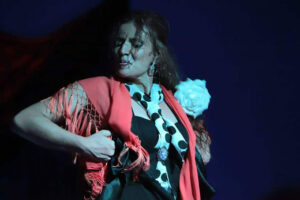
The mastery of Susana La Yedra: a gypsy expression of flamenco dance
Susana La Yedra, exclusive dancer at KELIPÉ, embodies the power of the gypsy influence on flamenco dance. Her fluid and passionate movements encapsulate the emotional strength that flamenco carries, a result of centuries of gypsy tradition. Susana’s dance tells a story that connects the ancestral with the contemporary, evoking the depth of human emotions. Every step she takes on stage is imbued with the gypsy heritage, providing a window into the soul of flamenco.
Gypsy guitar playing: the magic of rhythm
Guitar playing is another aspect of flamenco that has received significant gypsy influence. Gypsy guitarists have developed a unique technique for accompanying singing and dancing. They stand out for their ability to follow the rhythm precisely while adding a personal touch to each performance.
The flamenco guitar, with its rhythmic and melodic character, has become one of the foundations of flamenco thanks to gypsy contributions. Legendary guitarists like Paco de Lucía brought the gypsy art of flamenco guitar to a global audience, showcasing the richness and complexity of this instrument within flamenco.
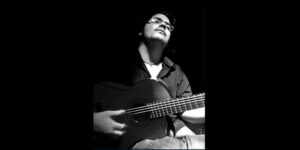
Azukita, master guitarist at KELIPÉ
Flamenco is not just about dance; the guitar and singing play a fundamental role. The gypsy influence in the “cante jondo,” with its deep and powerful voices, resonates in every note played by Azukita at the KELIPÉ stage. Our exclusive guitarist conveys the essence of the gypsy flamenco tradition through his playing, following the rhythm with unique precision and feeling. His mastery turns each performance into an unforgettable experience, connecting the past with the present of this art.
A living legacy at KELIPÉ
The gypsy legacy in flamenco remains alive and vibrant at KELIPÉ. With Susana La Yedra and Azukita as key figures, the center continues the gypsy tradition of flamenco in each of its performances. These artists do not just perform flamenco, they live it, and it is this authenticity that elevates their performances to a unique and transformative experience. In singing, guitar playing, and dancing, the gypsy influence continues to be the driving force behind the art of flamenco at KELIPÉ.
Conclusion
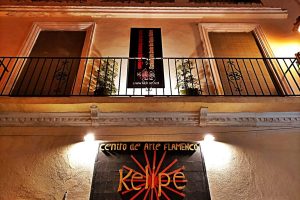
Flamenco is deeply linked to gypsy heritage, an influence that has shaped its essence since its origins. At KELIPÉ, a center for flamenco art in Málaga, that connection is celebrated and honored every day through its performances and artists. Susana La Yedra, exclusive dancer, and master guitarist Azukita, also an exclusive artist at the center, capture the gypsy spirit of flamenco with each performance, bringing to the stage the emotion and mastery of this living tradition.