

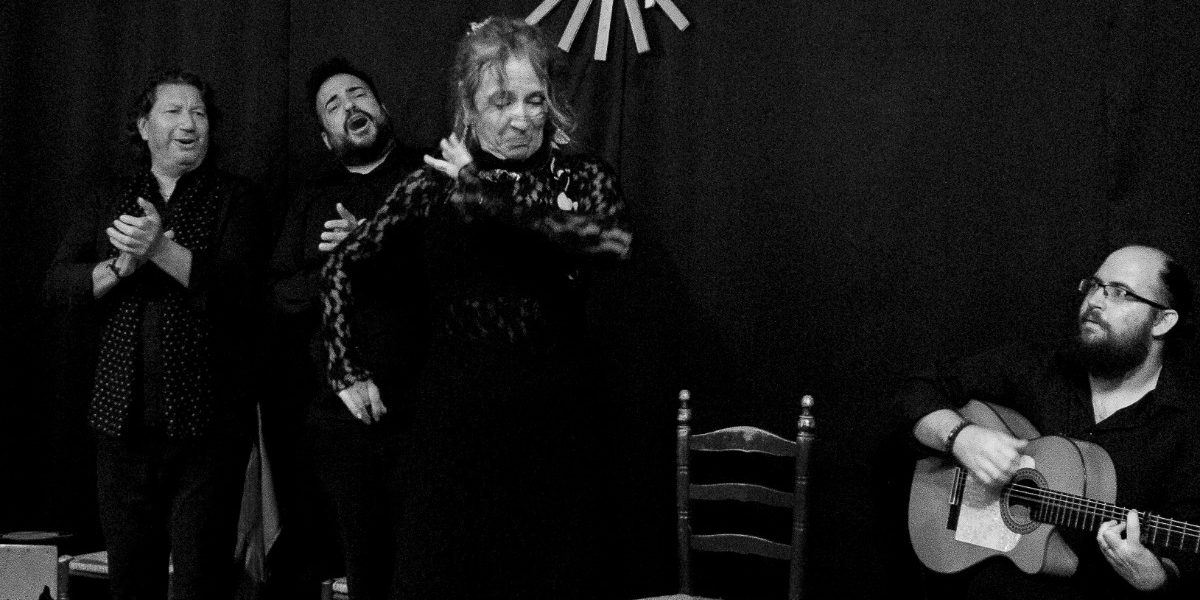
When people search for pure Flamenco in Málaga, they will find a wide range of different options. Flamenco shows, traditional venues, theatres, restaurants and cultural spaces all offer different ways to experience this art.
But what does it really mean to experience pure Flamenco?
There is no single answer. Flamenco is a living art form, with a deep history and an extraordinary diversity of styles, artists and ways of performing it.
There is, however, something that can make all the difference: the way Flamenco is understood, respected and passed on.
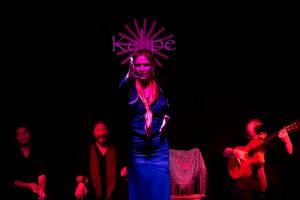
At KELIPÉ Teatro & Centro de Arte Flamenco, Flamenco is experienced from precisely this perspective. Located in Málaga’s historic city centre, KELIPÉ is a space where dance, singing, guitar, handclapping and rhythm come together live every night in an intimate and close-up experience.
Because Flamenco is not simply something you watch from your seat.
It is something you feel.
What does “pure Flamenco” really mean?
Talking about pure Flamenco does not mean referring to one particular style or a fixed formula.
Flamenco is far too deep to be confined to a single definition.
It is tradition, memory and creativity.
It is technique, but it is also emotion.
It is knowledge passed down from generation to generation, an art form with deep roots that remain alive through the people who know it, perform it and feel it.
That is why, when we talk about pure Flamenco at KELIPÉ, we are talking about a way of understanding this art with absolute respect for its essence, traditions and roots.
Flamenco singing has its own language.
The guitar responds and accompanies.
The dance interprets.
Handclapping marks the rhythm.
And the rhythmic structure brings all these elements together.
It is not simply about performing choreography or singing a song. It is about understanding how all these elements communicate with one another and create something that can only happen when the artists share the stage.
And this is at the heart of KELIPÉ: Flamenco that is passed on, preserved, performed and created as part of a living tradition, with absolute respect for its roots and its authenticity.
Authentic Flamenco in Málaga: much more than a show
The word “authentic” is often used when talking about Flamenco.
But authenticity does not depend solely on where a performance takes place or on the aesthetics surrounding it.
It is about what happens when the music begins.
It is about the artists.
The way they perform.
Their respect for Flamenco rhythm and tradition.
And the emotion behind every movement, every note and every word.
For this reason, finding authentic Flamenco in Málaga also means looking for an experience in which the art itself takes centre stage.
At KELIPÉ, the aim is not to build a show around a superficial image of Flamenco.
The aim is to bring audiences closer to an art form that is deeply rooted in Andalusian culture and that continues to live through the people who perform it, teach it and feel it.
KELIPÉ Teatro & Centro de Arte Flamenco: experience Flamenco up close
In the heart of Málaga’s historic city centre, you will find KELIPÉ Teatro & Centro de Arte Flamenco, a space dedicated to Flamenco for more than two decades.
Its intimate format allows audiences to experience the performance from just a short distance from the stage.
There is no great divide between the artists and the audience.
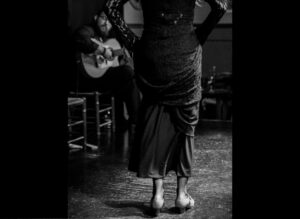
You can appreciate the movement of the dancers’ feet.
Hear the sound of the guitar.
Feel the rhythm of the handclapping.
And sense the energy in the room change as the Flamenco performance begins.
KELIPÉ is also a space for teaching, artistic creation and the promotion of Flamenco. The art does not only appear during the performance; it forms part of everyday life at the centre.
That is why attending a performance at KELIPÉ means entering a space where Flamenco is practised, taught and experienced throughout the year.
Flamenco is born from dialogue between artists
One of the most remarkable things about Flamenco is that it is never limited to a single performer.
Although the dance may initially draw everyone’s attention, behind every movement there is a constant conversation between the artists.
The guitar listens to the dance.
The dance responds to the guitar.
The singing adds another dimension.
Handclapping sustains the rhythm.
And everything happens live.
At KELIPÉ, this dialogue is an essential part of the performance.
The Flamenco dancer Susana Manzano La Yedra, exclusive KELIPÉ artist and founder, shares the stage with exclusive artists from the centre, including guitarist Azukita and singer Antonio Cortés.
Each brings their own language and experience, creating a form of communication that can never be reproduced in exactly the same way twice.
Because Flamenco is alive.
And when it is performed live, every show has its own energy.
Susana Manzano La Yedra: dance, technique and emotion
The dancing of Susana Manzano La Yedra is an essential part of KELIPÉ’s artistic identity.
Her interpretation of Flamenco combines technique, strength, elegance and a deep connection with music, but it also carries something that cannot be learnt solely in a dance school: the essence of a Flamenco heritage passed down through generations.
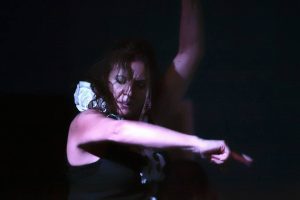
Susana Manzano La Yedra comes from prominent Gitano families closely connected to Flamenco. Her dancing also carries this memory — knowledge passed from one generation of artists to the next, expressed particularly through her hands, arms and every movement of her body.
Her hands do not simply accompany the music.
They speak.
They carry gestures, ways of moving and ways of feeling Flamenco that have travelled through generations, like a living memory held within the body of the dancer.
But Flamenco dance is not simply about performing movements.
The body listens.
The feet communicate through the rhythm.
The arms accompany the music.
The eyes communicate.
And every gesture can completely transform the way the audience experiences a particular lyric or musical moment.
This connection between technique, heritage and emotion is one of the qualities that allows Flamenco to be understood as something far deeper than choreography.
Because some things can be taught.
And others, after generations, become part of the way an artist feels and expresses themselves.
Azukita: tradition and creativity through the guitar
The guitar plays a fundamental role in KELIPÉ’s musical identity.
Azukita, KELIPÉ’s exclusive Flamenco guitarist, performs as part of the show and brings a distinctive musical character that combines respect for tradition with his own creative work.
His repertoire includes original compositions that form part of KELIPÉ’s artistic identity.
His creative work is also captured in GÉNESIS – Reflexiones en el tiempo, a live CD featuring 13 original compositions recorded entirely at KELIPÉ.
The project reflects his personal and artistic journey and his understanding of Flamenco as a living legacy: connected to the past, while continuing to evolve through new creation.
The guitar, therefore, is not simply an accompaniment to the dance.
It is another voice within the performance.
Antonio Cortés: a voice with Andalusian roots
The Flamenco singing of Antonio Cortés, KELIPÉ’s exclusive singer, provides another essential voice within the theatre’s artistic identity.
With Malagueña and Granadan roots and coming from a Gitano family connected to Flamenco, his interpretation also draws on a tradition passed down from generation to generation.
His voice, his feeling for rhythm and his way of contributing to the dialogue between singing, guitar and dance all form part of the Flamenco experience at KELIPÉ.
A 90-minute live Flamenco performance
At KELIPÉ, each performance lasts approximately 90 minutes.
During this time, audiences experience a performance built around dance, Flamenco singing, guitar, handclapping and rhythm.
Everything happens live.
No recorded music.
No need for elaborate effects.
The intimacy of the venue allows audiences to appreciate details that can sometimes be lost on larger stages: the sound of feet striking the wooden floor, the artists’ breathing, the guitar, the handclapping and the changes in energy throughout the performance.
It is precisely this closeness that allows Flamenco to be experienced differently.
Not simply watched.
Experienced.
Pure Flamenco in Málaga: an authentic experience in the heart of Andalusia
When people search for pure Flamenco in Málaga, they will find a wide range of different options. Flamenco shows, traditional venues, theatres, restaurants and cultural spaces all offer different ways to experience this art.
But what does it really mean to experience pure Flamenco?
There is no single answer. Flamenco is a living art form, with a deep history and an extraordinary diversity of styles, artists and ways of performing it.
There is, however, something that can make all the difference: the way Flamenco is understood, respected and passed on.
At KELIPÉ Teatro & Centro de Arte Flamenco, Flamenco is experienced from precisely this perspective. Located in Málaga’s historic city centre, KELIPÉ is a space where dance, singing, guitar, handclapping and rhythm come together live every night in an intimate and close-up experience.
Because Flamenco is not simply something you watch from your seat.
It is something you feel.
What does “pure Flamenco” really mean?
Talking about pure Flamenco does not mean referring to one particular style or a fixed formula.
Flamenco is far too deep to be confined to a single definition.
It is tradition, memory and creativity.
It is technique, but it is also emotion.
It is knowledge passed down from generation to generation, an art form with deep roots that remain alive through the people who know it, perform it and feel it.
That is why, when we talk about pure Flamenco at KELIPÉ, we are talking about a way of understanding this art with absolute respect for its essence, traditions and roots.
Flamenco singing has its own language.
The guitar responds and accompanies.
The dance interprets.
Handclapping marks the rhythm.
And the rhythmic structure brings all these elements together.
It is not simply about performing choreography or singing a song. It is about understanding how all these elements communicate with one another and create something that can only happen when the artists share the stage.
And this is at the heart of KELIPÉ: Flamenco that is passed on, preserved, performed and created as part of a living tradition, with absolute respect for its roots and its authenticity.
Authentic Flamenco in Málaga: much more than a show
The word “authentic” is often used when talking about Flamenco.
But authenticity does not depend solely on where a performance takes place or on the aesthetics surrounding it.
It is about what happens when the music begins.
It is about the artists.
The way they perform.
Their respect for Flamenco rhythm and tradition.
And the emotion behind every movement, every note and every word.
For this reason, finding authentic Flamenco in Málaga also means looking for an experience in which the art itself takes centre stage.
At KELIPÉ, the aim is not to build a show around a superficial image of Flamenco.
The aim is to bring audiences closer to an art form that is deeply rooted in Andalusian culture and that continues to live through the people who perform it, teach it and feel it.
KELIPÉ Teatro & Centro de Arte Flamenco: experience Flamenco up close
In the heart of Málaga’s historic city centre, you will find KELIPÉ Teatro & Centro de Arte Flamenco, a space dedicated to Flamenco for more than two decades.
Its intimate format allows audiences to experience the performance from just a short distance from the stage.
There is no great divide between the artists and the audience.
You can appreciate the movement of the dancers’ feet.
Hear the sound of the guitar.
Feel the rhythm of the handclapping.
And sense the energy in the room change as the Flamenco performance begins.
KELIPÉ is also a space for teaching, artistic creation and the promotion of Flamenco. The art does not only appear during the performance; it forms part of everyday life at the centre.
That is why attending a performance at KELIPÉ means entering a space where Flamenco is practised, taught and experienced throughout the year.
Flamenco is born from dialogue between artists
One of the most remarkable things about Flamenco is that it is never limited to a single performer.
Although the dance may initially draw everyone’s attention, behind every movement there is a constant conversation between the artists.
The guitar listens to the dance.
The dance responds to the guitar.
The singing adds another dimension.
Handclapping sustains the rhythm.
And everything happens live.
At KELIPÉ, this dialogue is an essential part of the performance.
The Flamenco dancer Susana Manzano La Yedra, exclusive KELIPÉ artist and founder, shares the stage with exclusive artists from the centre, including guitarist Azukita and singer Antonio Cortés.
Each brings their own language and experience, creating a form of communication that can never be reproduced in exactly the same way twice.
Because Flamenco is alive.
And when it is performed live, every show has its own energy.
Susana Manzano La Yedra: dance, technique and emotion
The dancing of Susana Manzano La Yedra is an essential part of KELIPÉ’s artistic identity.
Her interpretation of Flamenco combines technique, strength, elegance and a deep connection with music, but it also carries something that cannot be learnt solely in a dance school: the essence of a Flamenco heritage passed down through generations.
Susana Manzano La Yedra comes from prominent Gitano families closely connected to Flamenco. Her dancing also carries this memory — knowledge passed from one generation of artists to the next, expressed particularly through her hands, arms and every movement of her body.
Her hands do not simply accompany the music.
They speak.
They carry gestures, ways of moving and ways of feeling Flamenco that have travelled through generations, like a living memory held within the body of the dancer.
But Flamenco dance is not simply about performing movements.
The body listens.
The feet communicate through the rhythm.
The arms accompany the music.
The eyes communicate.
And every gesture can completely transform the way the audience experiences a particular lyric or musical moment.
This connection between technique, heritage and emotion is one of the qualities that allows Flamenco to be understood as something far deeper than choreography.
Because some things can be taught.
And others, after generations, become part of the way an artist feels and expresses themselves.
Azukita: tradition and creativity through the guitar
The guitar plays a fundamental role in KELIPÉ’s musical identity.
Azukita, KELIPÉ’s exclusive Flamenco guitarist, performs as part of the show and brings a distinctive musical character that combines respect for tradition with his own creative work.
His repertoire includes original compositions that form part of KELIPÉ’s artistic identity.
His creative work is also captured in GÉNESIS – Reflexiones en el tiempo, a live CD featuring 13 original compositions recorded entirely at KELIPÉ.
The project reflects his personal and artistic journey and his understanding of Flamenco as a living legacy: connected to the past, while continuing to evolve through new creation.
The guitar, therefore, is not simply an accompaniment to the dance.
It is another voice within the performance.
Antonio Cortés: a voice with Andalusian roots
The Flamenco singing of Antonio Cortés, KELIPÉ’s exclusive singer, provides another essential voice within the theatre’s artistic identity.
With Malagueña and Granadan roots and coming from a Gitano family connected to Flamenco, his interpretation also draws on a tradition passed down from generation to generation.
His voice, his feeling for rhythm and his way of contributing to the dialogue between singing, guitar and dance all form part of the Flamenco experience at KELIPÉ.
A 90-minute live Flamenco performance
At KELIPÉ, each performance lasts approximately 90 minutes.
During this time, audiences experience a performance built around dance, Flamenco singing, guitar, handclapping and rhythm.
Everything happens live.
No recorded music.
No need for elaborate effects.
The intimacy of the venue allows audiences to appreciate details that can sometimes be lost on larger stages: the sound of feet striking the wooden floor, the artists’ breathing, the guitar, the handclapping and the changes in energy throughout the performance.
It is precisely this closeness that allows Flamenco to be experienced differently.
Not simply watched.
Experienced.
What makes a Flamenco performance authentic?
There are many ways to experience Flamenco in Málaga.
Some venues offer large-scale productions.
Others combine Flamenco with dinner or other forms of entertainment.
And there are also smaller spaces where the focus is placed almost entirely on the artists and the music.
None of these formats is necessarily better than another.
The important thing is knowing what you are looking for.
If your aim is to discover authentic Flamenco in Málaga, it is worth paying attention to certain details.
Who are the artists?
How much experience do they have?
Is the performance completely live?
How close is the audience to the stage?
Does the venue have a genuine connection with Flamenco?
And, above all, does the performance allow the artists to express themselves without unnecessary distractions?
These questions can help you choose an experience that goes beyond simply watching a show.
Tradition and creativity can exist together
When people hear the expression “pure Flamenco”, they sometimes imagine that tradition means performing exactly what previous generations performed.
But Flamenco has never worked that way.
Throughout its history, artists have continued to develop the art while remaining connected to what they inherited.
Tradition provides the foundation.
Creativity allows it to continue growing.
At KELIPÉ, this relationship between tradition and artistic creation is part of the theatre’s identity.
The performances respect the roots of Flamenco while allowing the artists to express their own personalities.
Azukita’s original compositions are an example of this approach.
They do not replace traditional Flamenco.
Instead, they exist alongside it, adding another dimension to the musical identity of the performance.
This balance between heritage and creativity is essential for keeping Flamenco alive.
Because a tradition remains alive precisely when it continues to be performed, taught, shared and developed.
Why experiencing Flamenco live is different
You can read about Flamenco.
You can listen to recordings.
You can watch videos.
But there are certain aspects of Flamenco that can only truly be understood when you experience them live.
The sound of the guitar in the room.
The impact of the dancer’s footwork on the wooden stage.
The rhythm of the handclapping.
The exchange of glances between the performers.
The silence before a particular movement or musical phrase.
And the way the energy in the room changes as the performance develops.
These details are difficult to capture through a screen.
They are part of what makes a live Flamenco performance such a powerful experience.
At KELIPÉ, the intimate setting allows audiences to experience these details at close range.
There is no need to be familiar with Flamenco beforehand.
You simply need to be willing to listen and watch.
The artists take care of the rest.
Flamenco in Málaga for international visitors
Málaga attracts visitors from all over the world.
Many arrive knowing very little about Flamenco beyond the most familiar images of dancing, guitars and colourful costumes.
For some, their first Flamenco performance in Málaga becomes one of the most memorable moments of their trip.
That is because Flamenco does not require you to speak Spanish to connect with it.
The music communicates through rhythm, movement, expression and emotion.
The guitar speaks.
The dancer responds.
The singer adds another voice.
And the audience becomes part of the experience simply by being there.
This universal quality is one of the reasons why Flamenco continues to fascinate people from so many different countries and cultural backgrounds.
A Flamenco theatre in the heart of Málaga
KELIPÉ is located in Málaga’s historic city centre, making it easy to include a Flamenco performance as part of a day exploring the city.
Visitors can spend the afternoon discovering the old town, visiting museums, exploring Málaga Cathedral or enjoying the city’s restaurants and cafés before heading to the theatre.
The intimate setting offers a natural contrast to the activity of the city outside.
For around 90 minutes, the focus is entirely on the performance.
The artists.
The music.
The movement.
The rhythm.
And the communication taking place on stage.
It is a chance to experience another side of Andalusian culture without having to leave the centre of Málaga.
One performance. One audience. One evening.
KELIPÉ has a very specific way of working.
Rather than offering several performances throughout the day, the theatre presents one show per day, lasting approximately 90 minutes.
This allows the artists to concentrate their preparation, attention and energy on a single performance.
One stage.
One audience.
One artistic encounter.
It is a simple philosophy, but it reflects the importance KELIPÉ places on the quality of the experience.
Every detail matters.
From the preparation before the performance to the final moment on stage.
Discover pure Flamenco in Málaga at KELIPÉ
If you are looking for pure Flamenco in Málaga, KELIPÉ offers an opportunity to experience this art form from close range, in an intimate theatre dedicated entirely to Flamenco.
Since 2001, KELIPÉ has developed its work around performance, teaching and the artistic creation of Flamenco.
Its identity is built around the connection between artists and audience, combining traditional Flamenco with the individual personalities and creativity of its performers.
On stage, Susana Manzano La Yedra’s dance meets Azukita’s guitar and Antonio Cortés’s singing, creating a live dialogue that changes with every performance.
The result is not simply a show to watch.
It is an opportunity to experience Flamenco as a living art form.
To listen.
To observe.
To feel the rhythm.
And to discover why Flamenco continues to occupy such an important place within Andalusian culture.
Experience Flamenco in Málaga for yourself
Reading about Flamenco can help you understand its history.
Learning about its artists can help you appreciate their work.
But there comes a point when the only way to understand Flamenco is to experience it for yourself.
Sit down.
Listen to the first notes of the guitar.
Watch the dancer take the stage.
Feel the rhythm.
Notice the communication between the performers.
And allow the performance to unfold naturally in front of you.
If you would like to experience authentic Flamenco in Málaga, you can check the upcoming performances at KELIPÉ Teatro & Centro de Arte Flamenco and book your tickets in advance.
Because some things can be explained with words.
But Flamenco is ultimately something that has to be experienced live.